How to Make a Bar of Soap Last Longer
Most bars do not wear out, they dissolve. Six habits that slow that down, from the soap dish to the cure, and why a handmade bar rewards them more than most.
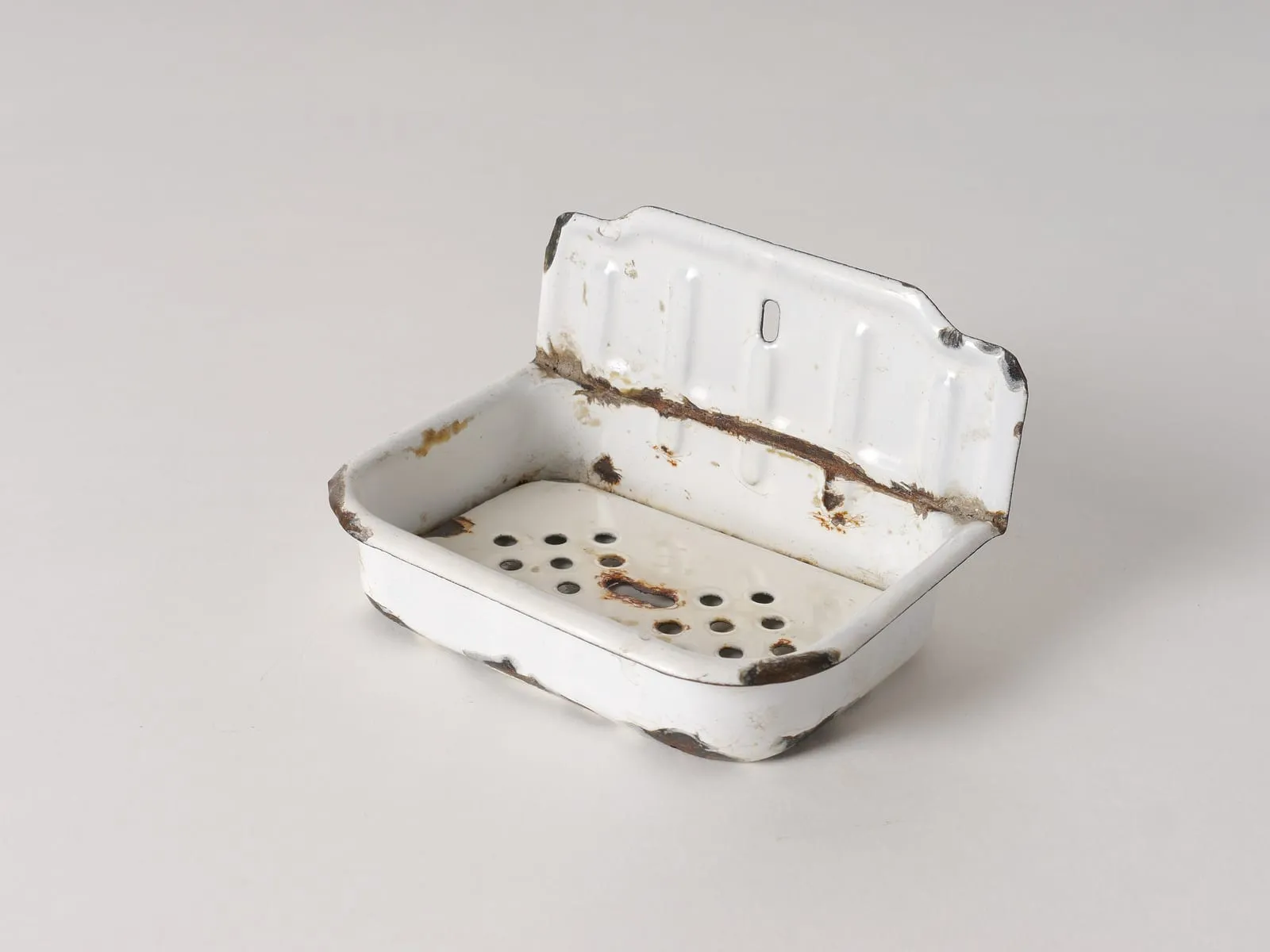
A bar of soap lasts longest when it dries out completely between uses. Keep it on a dish that drains, out of the shower spray, and cut big bars in half. A fully cured bar also lasts longer than a fresh one, because it is harder and dissolves more slowly.
A bar of soap lasts longest when it stays dry between uses, sits out of the shower spray, and has been properly cured. Most bars do not wear out. They dissolve, because wash water penetrates the surface of the bar and carries soap away. Slow that exposure and the same bar lasts longer.
Why does a bar of soap dissolve so fast?
A bar of soap dissolves because water soaks into its surface and carries soap molecules away, whether or not anyone is rubbing it. One soapmaker’s guide describes wash water penetrating the bar and mixing with the liquid around the soap crystals. A bar left sitting in water keeps dissolving.
How can you make a bar of soap last longer?
A bar of soap lasts longer when it spends less time wet and sits in less standing water. Six habits do most of the work, and they are listed below. No study we found tested these habits directly, so they follow from how soap dissolves rather than from trials.
- Use a dish that drains.
- Keep the bar out of the shower spray.
- Let it dry between uses.
- Cut large bars in half.
- Store spares somewhere dry.
- Start with a well-cured bar.
Which soap dish is best?
A soap dish that drains is best, because standing water keeps the base of the bar dissolving. A dish with slats, ridges or holes lets water run off and air reach the underside. Wood, ceramic with drainage holes and simple wire racks all work. A solid saucer holds water and is the worst choice.
Should soap be kept out of the shower spray?
Soap should be kept out of the shower spray, because spray wets the bar whether or not anyone uses it. A shelf directly below the shower head gives the bar a rinse at every shower. A corner the water does not reach lets the surface dry between uses, which is the point of the whole list.
How long should a bar dry between uses?
A bar should be dry to the touch before its next use, which is the goal rather than a fixed time. If two people shower back to back, a second bar can help, because each bar then spends longer drying between uses and so loses less soap.
Does cutting a bar in half help?
Cutting a large bar in half helps because a smaller piece in use has less surface exposed to water at once. Keep the other half dry and wrapped until the first is finished. The saving is likely to matter most with large or soft bars. This is a practical habit, not a tested result.
How should spare bars be stored?
Spare bars keep best in a cool, dry place with some airflow, such as a drawer or open shelf. A closed, humid bathroom cabinet is a poor choice. Classic Bells notes that heat, light, water and contaminants all speed oxidation, and advises storing soap cool and dark.
Does a well-cured bar last longer?
A well-cured bar lasts longer because curing makes it harder and less soluble. Classic Bells says evaporation makes a bar harder and less soluble, and that the crystals of a cured bar resist wearing away. In Dunn’s measurements, hardness rose as moisture fell.
The 2018 study puts saponification at 18 to 24 hours, then 3 to 4 weeks of cure. The full timeline is in how long soap needs to cure. The cure time a maker gives you is worth asking about.
Does a bar made with less water last longer?
A bar made with less water starts harder and cures sooner, but the gap closes. In Dunn’s measurements, low-water bars were much harder at first, yet by the end of the 60-day study all three palm oil bars were very hard. The recipe’s water mainly changes how long the wait is.
How is soap hardness measured?
Soap hardness is measured with a penetrometer, a spring-loaded foot pressed into the bar. Dunn used a 0.25 inch foot and a scale of 0 to 4.5 kg/cm2, plus a smaller foot for harder bars. Few people can do this at home, so weighing a bar is the practical check, as the cure guide explains.
Does storing spare bars for months improve them?
Storing spare bars for months can improve them, with a limit. Classic Bells reports a 90% lard bar whose lather was dramatically better at one year, and says crystal changes can take months. A 2018 study notes unsaturated fatty acids oxidise during curing and storage, so store them cool, dark and dry.
Which soap recipes last longest?
Recipes rich in saturated fatty acids tend to last longest, because those acids make a harder bar. SoapCalc says a harder bar lasts longer in the shower and credits lauric, myristic, palmitic and stearic acids with hardness. Solubility differs between them, as the table shows.
| Fatty acid | Common oils and fats | How its soap behaves in water |
|---|---|---|
| Lauric | Coconut, palm kernel | Highly soluble, hard, bubbly |
| Myristic | Coconut, palm kernel | Highly soluble |
| Palmitic | Palm, shea, tallow | Moderately soluble |
| Stearic | Cocoa butter, shea, tallow | Almost insoluble |
| Oleic | Olive, palm, tallow | Bulky shape fits poorly into crystals; sits in the liquid phase |
Solubility is from Classic Bells, hardness from SoapCalc, and oil sources from Wikipedia’s tabulation and SoapCalc. The oil lists are typical sources, not guarantees. Superfat also shifts a bar’s softness.
Why do handmade bars need more care?
Handmade bars need more care because they usually keep their glycerine. Wikipedia notes that glycerin left in soap acts as a softening agent, and glycerol is hygroscopic. A handmade bar may therefore soften faster in a wet dish, so drainage matters more.
See why handmade soap costs more for the rest of the trade-off.
Frequently asked questions
- Is it unhygienic to keep reusing a bar of soap?
- The evidence points both ways. A 2006 study in an Indian dental journal found microbes on every in-use bar sampled from dental clinics and warned of possible spread of infection. A 1988 laboratory test found no bacteria transferred to hands from heavily inoculated bars, but its authors worked for a soap manufacturer. If a bar is shared in a clinic or care setting, ask the people running it.
- Why does handmade soap feel damp in humid weather?
- Handmade soap usually keeps its glycerine, and glycerol is hygroscopic, meaning it attracts water. In humid air a bar may take up moisture on its surface. Keeping bars in a dry spot with airflow, and not in a closed bathroom cabinet, limits it.
- Can a bar of soap go bad if stored for a year?
- It can. Soap that contains unsaturated oils can oxidise and turn rancid, forming smelly ketones and aldehydes, and orange spots may appear. Heat, light, water and contaminants all speed this up, so store spares cool, dark and dry.
- Is a harder bar always better?
- Not always. A harder bar dissolves more slowly, but very hard soaps can be prone to cracking. In industrial toilet soap, high levels of palm stearin made bars prone to cracking, and adding 1 to 2% neutral oil or glycerin gave crack-free bars. Hardness is one quality to balance, not the only one.
Sources
- primaryDunn, The Water Discount, Handcrafted Soap & Cosmetic GuildMeasured with a penetrometer: bar hardness rose as moisture fell, and bars that started with less water were harder sooner.
- primaryVidal et al., The Effects of Cold Saponification on the Unsaponified Fatty Acid Composition and Sensory Perception of Commercial Natural Herbal Soaps, Molecules, 2018Cold process saponification takes 18 to 24 hours with a further 3 to 4 weeks of cure; unsaturated fatty acids oxidise during curing and storage.
- primaryKuntom et al., Effects of superfatting agents on cracking phenomena in toilet soap, Journal of Surfactants and Detergents, 1999Toilet soaps high in palm stearin were hard and prone to surface cracks, which superfatting agents reduced (abstract checked via Crossref).
- primaryHeinze and Yackovich, Washing with contaminated bar soap is unlikely to transfer bacteria, Epidemiol Infect, 1988In a test with 16 volunteers, no E. coli or Pseudomonas was detected on hands after washing with inoculated bars (the authors worked at a soap manufacturer).
- primaryHegde et al., Microbial contamination of "in use" bar soap in dental clinics, Indian J Dent Res, 2006All 32 in-use bar soap samples from 18 dental clinics grew microbes; the authors judged handwashing with such soap could spread infection.
- secondaryClassic Bells: Curing soapWash water penetrates a bar and mixes with its liquid phase; evaporation makes soap harder and less soluble; the crystals in a cured bar resist wearing away; stearic soap is almost insoluble and lauric and myristic soaps highly soluble.
- secondarySoapCalc: soap qualities chartA harder bar lasts longer in the shower; saturated fatty acids drive hardness.
- secondaryWikipedia: SoapGlycerin is sometimes left in the soap as a softening agent, making the bar softer.
- secondaryWikipedia: GlycerolGlycerol is hygroscopic and used as a humectant.
- secondaryClassic Bells: Rancidity and DOSSoap oxidises from heat, light, water and contaminants, and is best stored cool and dark.
Read next
All articles →
Ingredients
Activated Charcoal in Soap: What It Does and What It Does Not
Charcoal soap is sold as a detox. What activated charcoal actually does in a rinse-off bar, how it compares with other black powders, and which claims lack evidence.
Buying Well
Why Handmade Soap Costs More Than a Supermarket Bar in India
Why a handmade bar often costs more: oil prices, weeks on a curing rack, retained glycerine, small batches and Indian licensing, with World Bank and Cosmetics Rules data.
The Craft
Why Is Soap Alkaline? What pH-Balanced Bars Really Are
True soap always tests alkaline, usually between pH 8 and 11. Here is why that follows from the chemistry, and what a bar sold as pH 5.5 actually contains.