What Is Saponification? The Chemistry of Every Soap Bar
Saponification is the reaction that turns fat and lye into soap and glycerine. Here is what happens molecule by molecule, and why no lye survives it.
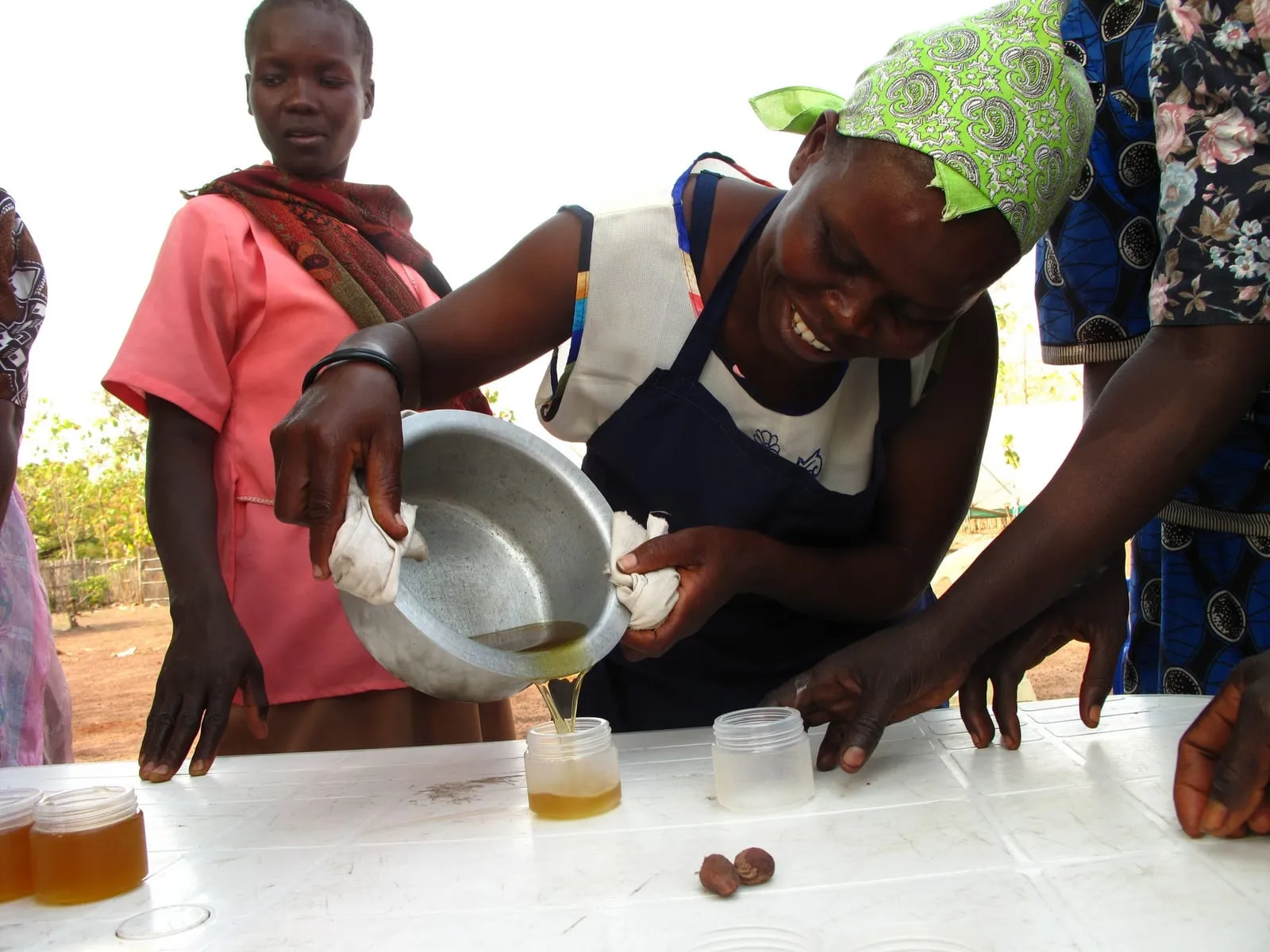
Saponification is the reaction between a fat and a strong alkali that produces soap and glycerine. The lye is consumed by the reaction. It is a reactant, not an ingredient of the finished bar, which is why finished soap contains no lye.
Saponification is the chemical reaction between a fat and a strong alkali that produces soap and glycerine. The word comes from the Latin sapo, meaning soap, and the US regulator defines soap as a product whose bulk is an alkali salt of fatty acids. In a clay pot or a steel tank, the reaction is the same.
What chemical reaction is saponification?
Saponification is the reaction in which hydroxide ions cut a triglyceride into three fatty acid salts and one glycerol molecule. A triglyceride is a glycerol backbone carrying three fatty acid chains. As Kevin Dunn writes, each oil molecule can need three sodium hydroxide molecules.
triglyceride + 3 NaOH  →  3 sodium salts of fatty acids  +  glycerol
      (fat)     (lye)              (SOAP)                  (glycerine)
Those fatty acid salts are the soap. The glycerol is the by-product.
What does saponification make besides soap?
Saponification also makes glycerol, usually called glycerine, a humectant that draws water toward the skin. Handmade cold process soap keeps its glycerine. In modern industrial soapmaking the glycerin is usually separated and resold, so a handmade bar and a factory bar are different products even though the reaction is identical.
Is there lye in finished soap?
Finished soap contains no lye when the recipe is calculated correctly. Lye is a reactant, consumed by the reaction in the way raw egg is consumed when a cake bakes. Makers also deliberately use a small deficit of lye, so the alkali runs out first. Superfat and lye discount explains that margin.
The Indian toilet soap standard, IS 2888:2004, takes the same view: it caps free caustic alkali, expressed as sodium hydroxide, instead of allowing any.
How much lye does each oil need?
Each oil needs its own amount of lye, set by its saponification value, or SAP: the alkali needed to saponify one gram. Coconut oil needs about 0.183 g of sodium hydroxide per gram, and olive oil about 0.135 g, according to SoapCalc’s oil list. Shorter fatty acid chains mean a higher value.
| Oil | NaOH per gram of oil | Known in India as |
|---|---|---|
| Coconut oil | 0.183 | Nariyal tel |
| Ghee | 0.162 | Ghee |
| Palm oil | 0.142 | Palm oil |
| Olive oil | 0.135 | Olive oil |
| Sesame oil | 0.134 | Til oil |
| Castor oil | 0.128 | Arandi tel |
| Mustard oil (kachi ghani) | 0.123 | Sarson tel |
Real oils vary from these averages, which is why no recipe uses the full value.
How long does saponification take?
Cold process saponification takes about 18 to 24 hours, followed by 3 to 4 weeks of cure, according to a 2018 study of cold process soaps. Dunn’s test bars agree: most saponification happened in the first 24 hours, while moisture kept falling for 60 days. The cure itself is a separate process.
Does saponification need heat?
Saponification in cold process needs no outside heat, because the reaction warms the batch itself. The Handcrafted Soap & Cosmetic Guild notes that the heat is internally generated. Hot process adds a heat source to finish the reaction faster. The methods compared trade speed against control.
What is trace?
Trace is the point where oil and lye solution have emulsified into a stable batter. The Guild describes it as ridges of liquid visible on the surface when the stick blender is lifted out. Trace shows the mixture will not separate again. It does not show the reaction is finished, which takes hours more.
Which fats and oils can be saponified?
Any triglyceride can be saponified, which is why vegetable oils and animal fats are both used. According to Wikipedia, toilet soaps are commonly made from coconut, olive or palm oil, or from tallow. The choice changes the bar’s hardness, lather and mildness, not whether it counts as soap. See the full oil comparison below.
How was soap made before commercial lye?
Before commercial sodium hydroxide existed, soapmakers used a boiling solution of potassium carbonate leached from wood ashes, according to a university chemistry text. The soft potassium soaps that resulted were then converted to harder sodium soaps by washing with salt solution. The reaction was the same one.
Can soap turn back into fat?
Soap can turn back into insoluble fatty acids if its pH falls far enough. LibreTexts notes that acidic contaminants make insoluble fatty acids precipitate as scum. That is the chemistry behind why real soap is alkaline and why a bar cannot be pushed down to skin pH.
Is cold process soap ever fully saponified?
Cold process soap is never 100% saponified, and it is not meant to be. The 2018 study found that 86 to 99% of the polyunsaturated fatty acids in its soaps stayed unsaponified. That leftover oil is the superfat doing its job. It is also the part that can oxidise and turn rancid with time.
Why does the oil blend change how soap behaves?
The oil blend changes a bar because each fatty acid becomes a different soap molecule. SoapCalc’s chart credits lauric, myristic, palmitic and stearic acids with hardness, and oleic, linoleic and linolenic acids with conditioning. Every oil carries several acids at once.
| Oil | Main fatty acids (share of oil) | Tendency of the bar |
|---|---|---|
| Coconut | Lauric 48%, myristic 18% | Hard, bubbly, strongly cleansing |
| Palm | Palmitic 44%, oleic 37% | Hard, creamy lather |
| Olive | Oleic 78%, palmitic 11% | Mild, conditioning, slow lather |
Shares are the figures Wikipedia tabulates; they vary between samples. A pure olive bar is mild but wants a long cure.
Do sodium hydroxide and potassium hydroxide make the same soap?
Sodium hydroxide and potassium hydroxide run the same reaction but make different soaps. According to Wikipedia’s soap article, sodium soaps are firm, while potassium soaps are softer or often liquid. Bar soap uses sodium hydroxide. Liquid soap uses potassium hydroxide.
What counts as soap in law and standards?
Soap, in the US regulator’s sense, is a product whose bulk is an alkali salt of fatty acids, whose detergent action comes from those salts, and which is sold only as soap. 21 CFR 701.20 states this. A bar that fails the test is legally a cosmetic or a drug, so reading the label is worth the minute.
Frequently asked questions
- Is saponification the same as curing soap?
- No. Saponification is the chemical reaction, and most of it is done within the first day. Curing is the slower drying that follows over weeks. A bar can be fully saponified and still be too soft, short-lived and thin-lathering to use well.
- Can you make real soap without lye?
- Not from scratch. Soap is the salt formed when a fat reacts with a strong alkali, and sodium or potassium hydroxide is that alkali. A lye-free product is made from a base someone else already saponified, or it is not soap.
- What is the difference between sodium hydroxide soap and potassium hydroxide soap?
- The alkali decides the texture. Sodium hydroxide gives firm bar soap, while potassium hydroxide gives softer soap that is often liquid. The reaction is the same and only the metal ion in the finished soap changes.
- Why does handmade soap keep its glycerine?
- Glycerine is a by-product of the reaction and a handmade maker simply does not remove it. Many industrial makers separate it and sell it on. In a handmade bar the glycerine stays as a mild humectant, which draws water toward the skin.
- Does saponification need outside heat?
- Not in cold process. The reaction generates heat inside the mould, which is why the method needs no stove after mixing. Hot process adds heat on purpose to finish the reaction in hours instead of a day or two.
Sources
- primaryUS FDA: Is It a Cosmetic, a Drug, or Both? (Or Is It Soap?)The regulator's definition of soap: the bulk of the nonvolatile matter is an alkali salt of fatty acids.
- primary21 CFR 701.20: Detergent properties and soap (Cornell LII)The regulation text behind that definition of soap.
- primaryIS 2888:2004 Toilet Soap: Specification, Bureau of Indian Standards (public copy on Internet Archive)The Indian standard grades toilet soap by total fatty matter and sets a limit on free caustic alkali.
- primaryVidal et al., The Effects of Cold Saponification on the Unsaponified Fatty Acid Composition and Sensory Perception of Commercial Natural Herbal Soaps, Molecules, 2018Saponification takes 18 to 24 hours with 3 to 4 weeks of cure after, and 86 to 99% of the polyunsaturated fatty acids in the tested cold process soaps stayed unsaponified.
- primaryDunn, The Water Discount, Handcrafted Soap & Cosmetic GuildEach oil molecule needs three sodium hydroxide molecules; in measured bars most saponification happened in the first 24 hours.
- secondaryHandcrafted Soap & Cosmetic Guild: Hot Process for BeginnersHeat in cold process is generated internally by saponification; trace shows as visible trails on the batter.
- secondarySoapCalc oil list: SAP values and fatty acid profilesPer-oil saponification values in the table.
- secondarySoapCalc: soap qualities chartWhich fatty acids drive hardness, cleansing, lather and conditioning.
- secondaryWikipedia: SaponificationDefinition, the Latin origin of the word, and the use of a small lye deficit.
- secondaryWikipedia: SoapSodium soaps are firm and potassium soaps softer or liquid; fatty acid content of coconut, palm and olive oil.
- secondaryWikipedia: Glycerin soapIn modern industrial soapmaking the glycerin is usually separated and resold.
- secondaryChemistry LibreTexts: Soaps and DetergentsSoap was made from wood-ash potassium carbonate before commercial sodium hydroxide, and acid turns soap back into insoluble fatty acids.
- secondaryCCOHS: Sodium hydroxideSodium hydroxide causes severe skin burns and eye damage and reacts violently with water.
Read next
All articles →
The Craft
Why Is Soap Alkaline? What pH-Balanced Bars Really Are
True soap always tests alkaline, usually between pH 8 and 11. Here is why that follows from the chemistry, and what a bar sold as pH 5.5 actually contains.
The Craft
Superfat and Lye Discount, Explained With a Worked Example
Superfat and lye discount are the same adjustment described from opposite ends. Here is the arithmetic, worked in full, and how to pick a number.
The Craft
How Long Does Soap Need to Cure? Cold and Hot Process
Cold process soap needs about 4 to 6 weeks to cure, and olive-heavy bars longer. What changes during the cure, and how to tell when a bar is actually done.